Working With a Smart Home Automation Comany: A Guide for General Contractors
Key Takeaways
-
Involving an HTA-certified smart home integrator like Get Wired Tec during schematic design prevents costly rework and change orders averaging 15-25% higher when engagement happens late.
-
A single low-voltage partner coordinates home automation, audio video, networking, security camera systems, lighting control and motorized shades, simplifying the general contractor’s oversight across cities like Los Angeles, Santa Monica, Malibu, Pacific Palisades, Calabasas, Agoura Hills, and Westlake Village projects.
-
Spec homes with well-designed smart infrastructure sell 20-30% faster and command 5-8% price premiums in high-end markets.
-
Long-term service plans from your integrator protect your reputation well after the punch list is complete, reducing callbacks by up to 70%.
-
Clear role definition between a General Contractor and integrator eliminates trade conflicts and keeps construction schedules intact.
Introduction: Why Smart Home Integrators Matter on Today’s Job Sites
By 2026, smart home technology has become a baseline expectation in mid-to-high-end residential construction throughout Los Angeles and Ventura County. Luxury homes exceeding 4,000 to 6,000 square feet routinely command premiums of 10-20% for tech-forward features. The global smart home market continues expanding, and buyers now expect seamless integration of smart devices, robust networks, and intuitive control systems before they sign.
A professional integrator like Get Wired Tec functions as your low-voltage and technology partner, similar in importance to MEP engineers and structural subs. They handle everything from system design to programming, ensuring smart home systems work together rather than operating as frustrating silos.
Consider two recent projects. A 6,000 sq. ft. Malibu oceanfront new build brought Get Wired Tec in during schematic design, aligning low-voltage closets with hillside topography and saving $45,000 by preempting roof camera wiring issues. Conversely, a 4,000 sq. ft. Thousand Oaks renovation delayed integrator involvement until trim-out, resulting in $18,000 in change orders for conduit chases to outdoor entertainment zones.
Bring your low voltage contractor to the table as early as your architect and interior designer.
This article provides general contractors a practical, step-by-step framework to collaborate with integrators, reduce friction on site, and deliver reliable, easy-to-use smart home automation for your clients.
Roles on the Project: GC vs. Smart Home Integrator
Think of the general contractor as the orchestra conductor and the smart home integrator as the technology section leader. Both roles are essential, but each owns distinct responsibilities.
What the GC owns:
-
Overall project scope coordination and scheduling
-
Budget management and trade oversight
-
Inspections, permits, and client communication
-
Final walkthrough and punch list completion
What the smart home integrator owns:
-
Low-voltage system design and device specification
-
Wiring plans, rack elevations, and network topology
-
Programming automation logic and scene creation
-
System commissioning and client training
A smart home integrator isn’t simply an electrician with extra tools. They’re specialists in control systems like Control4, Nice Home Management and JOSH.AI, multi-room audio, home theaters, security camera systems, structured networking, and motorized shades. Their CEDIA certifications cover network security, AV calibration, and control system integration.
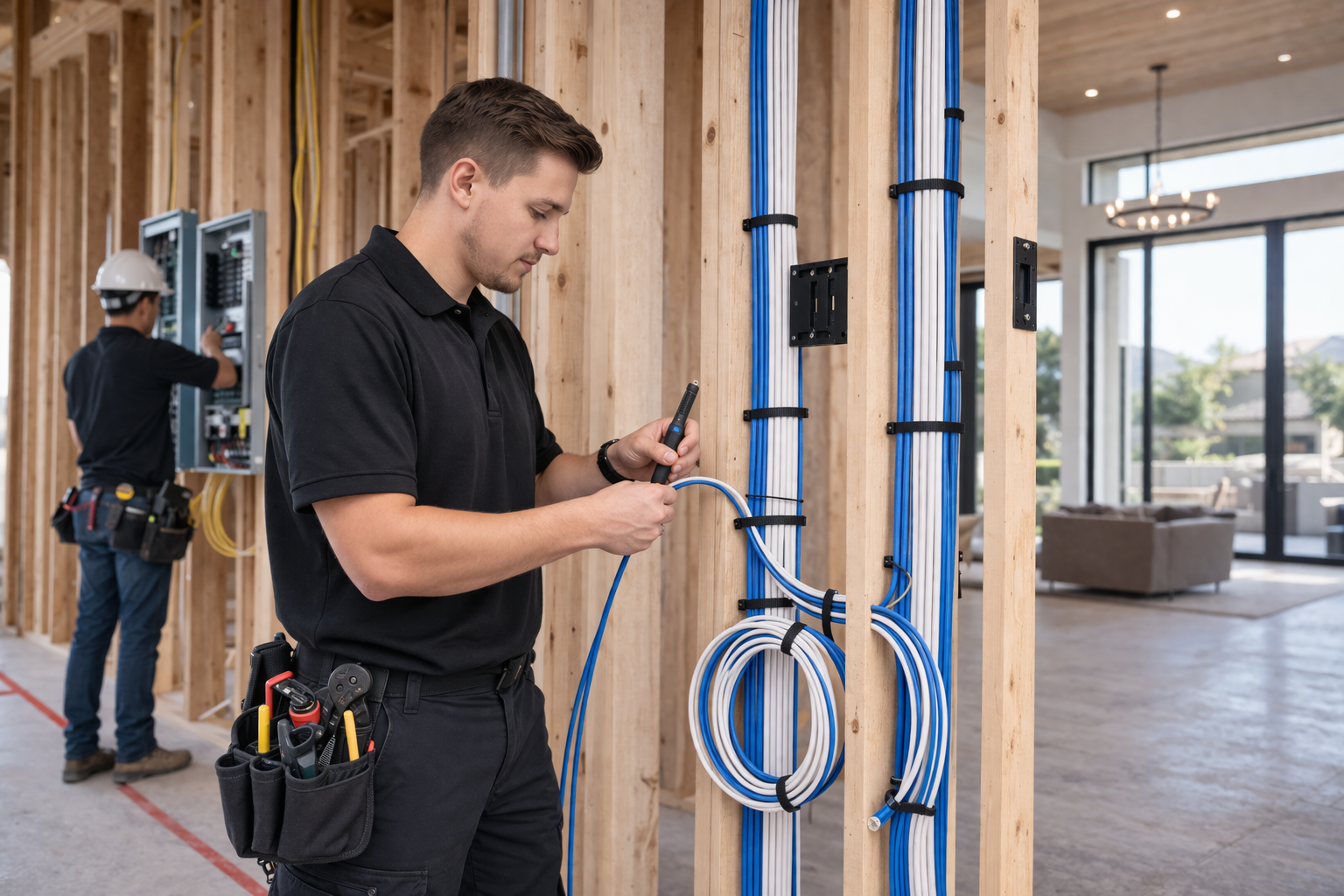
How Get Wired Tec works alongside your existing subs: In cities like Santa Monica and Westlake Village, Get Wired Tec collaborates with your preferred electricians and HVAC contractors without stepping on their scope. They handle dedicated low-voltage rough-ins before insulation while electricians focus on high-voltage power distribution. Detailed RFIs separate responsibilities clearly, maintaining tight construction schedules.
Planning and Design: Bring the Integrator in Early
The most critical step for any general contractor is engaging your integrator during pre-construction—ideally schematic design or early design development—not at trim-out when walls are closing.
Typical planning workflow:
-
Initial client vision meeting with GC and architect
-
Technology discovery session with Get Wired Tec to discuss lifestyle needs
-
Draft low-voltage and network design with equipment schedules
-
Budget alignment (typically 5-10% of total project cost)
-
Integration into architectural and electrical plans via shared drawings
In markets like Malibu and Westlake Village, clients expect whole-home audio with 20+ ceiling speakers, centralized smart lighting scenes, reliable Wi-Fi covering 5,000+ sq. ft. without dead zones, and gate integration with security cameras. All require dedicated planning.
Design deliverables your integrator should provide:
-
Low-voltage floor plans with homeruns to central hub locations
-
Rack elevations specifying equipment placement and clearances
-
Equipment schedules listing PoE switches, NVRs, and smart thermostats
-
Heat load calculations for climate-controlled closets
-
Network topology with VLAN segmentation for network security
-
Prewire diagrams for Cat6/Cat6a, coax, and shade control wiring
Common pitfalls when integrators arrive late:
-
Walls already closed without multi-floor conduits
-
No conduit paths from low-voltage closets to roof-mounted security cameras
-
Insufficient panel space for dedicated low-voltage circuits
-
Missing chases to outdoor entertainment areas and poolside pavilions
Construction Phasing: When Each Smart Home Task Should Happen
Sequencing matters enormously on tight Los Angeles construction schedules with multiple high-end trades on site. Miss a window, and you’re looking at expensive rework.
Phase-by-phase breakdown:
|
Phase |
Timing |
Key Activities |
|---|---|---|
|
Prewire/Rough-in |
Post-framing, pre-insulation |
Pull homeruns, install conduits, place backboxes |
|
Trim-out |
Post-drywall, pre-painting |
Install plates, pulls, and mounting brackets |
|
Device Installation |
During finishes |
Mount shades, smart thermostats, motion sensors, APs |
|
Rack Build |
Mid-finishes |
Configure central hub, switches, NVRs in dedicated closet |
|
Programming |
Post-trim |
Create scenes like “Entertain,” “Goodnight,” and voice assistants integration |
|
Testing |
Before CO |
Stress-test networks (>1Gbps throughput), verify remote access |
|
Client Handover |
Final days |
Training sessions, app setup, video tutorials |
Critical coordination points:
-
Low voltage rough-in must complete before insulation and drywall
-
Coordinate with HVAC for smart thermostat placement and IAQ sensor wiring
-
Align with landscape and pool contractors for outdoor speaker systems and Wi-Fi coverage
Plan at least 2-3 dedicated days for system testing and client training before final sign-off. This prevents move-in surprises that generate callbacks.
Infrastructure Essentials: Wiring, Networks, and Equipment Locations
Future proof low-voltage infrastructure behind the walls is your best defense against callbacks and client complaints. Smart devices require reliable connectivity, and that starts with proper planning.
Key low-voltage wiring considerations:
-
Homeruns consolidating to a central rack minimize points-of-failure
-
2-inch conduits between floors enable future fiber pulls for 100Gbps scalability
-
Ceiling speaker locations (6.5-8 inch, positioned 8-10 ft. apart) based on acoustic modeling
-
Dedicated wiring for security cameras, smart locks, and access control
-
16/2 lines for motorized shades and smart sensors
Network planning essentials:
-
Structured cabling with Cat6a supports 10Gbps over 100m runs
-
Wi-Fi access points with site surveys to avoid dead zones
-
Hardwired drops for 4K TVs, home offices, and NAS storage
-
VLAN segmentation separating smart home devices from family members’ personal devices
Equipment location requirements:
-
Dedicated low-voltage closet (minimum 8x10 ft.)
-
HVAC for temperature control (75°F/50% RH)
-
120V/20A dedicated circuits with UPS backup
-
Cable management with trays and TIA-606 standard labeling
Regional considerations: Hillside Los Angeles construction with long cable runs benefits from plenum-rated fiber for distances over 500 ft. Get Wired Tec selects enterprise-grade equipment tailored to these challenges.
Coordinating With Other Trades Without Conflict
On busy job sites in Los Angeles or Malibu, your integrator must work smoothly with electricians, plumbers, HVAC, framers, and designers to keep your schedule intact.
Coordination with electricians:
-
Clear separation of high-voltage (120/240V) from low-voltage (PoE <48VDC)
-
Shared conduit planning with 12-inch EMT separation
-
Smart lighting keypad locations at 48-inch AFF
-
EMI shielding via twisted-pair Cat6 avoiding power interference
Coordination with HVAC:
-
Smart thermostat placement away from supply registers
-
Zoning controls via BACnet integration
-
Mechanical room Ethernet drops for connected efficient appliances
Coordination with interior designers:
-
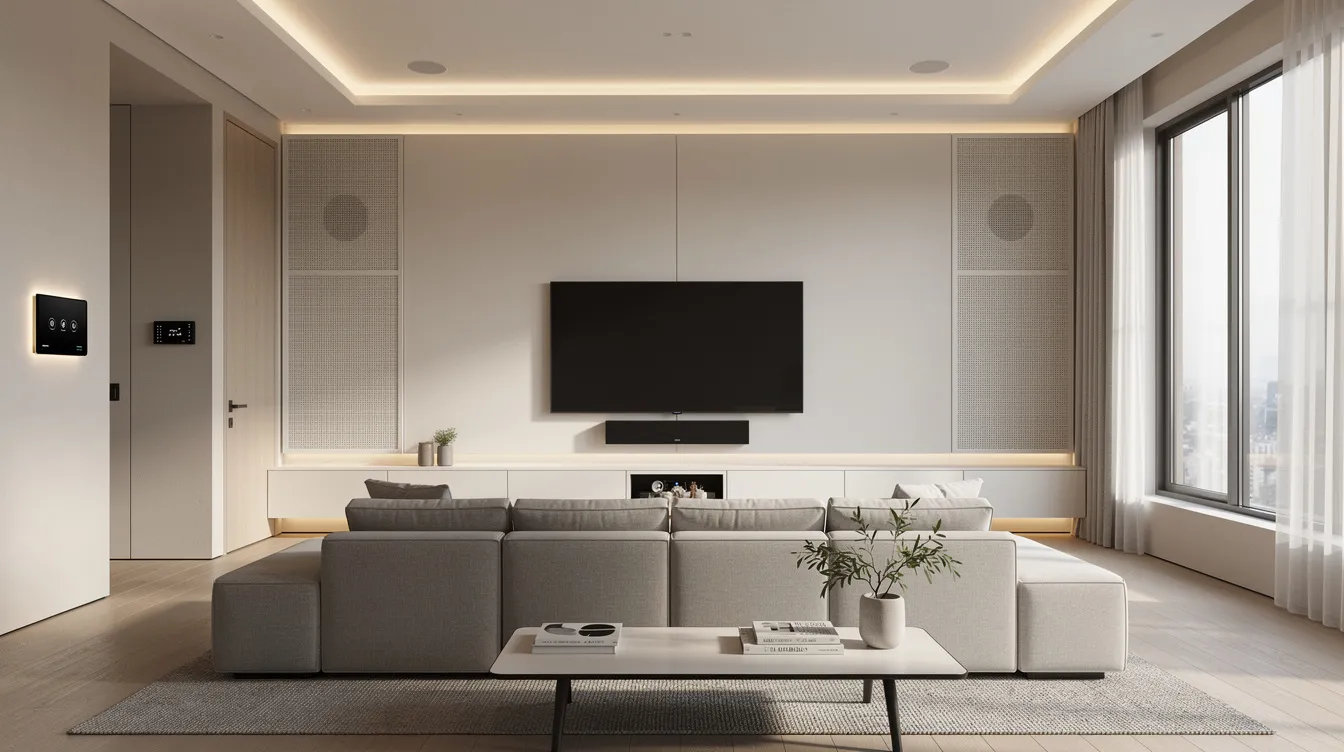
Millwork concealing flip-down TVs and smart speakers
-
In-ceiling speakers with paintable grilles
-
Shade pockets (4-inch depth minimum)
-
Flush-mounted keypads matching Westlake Village and Santa Monica aesthetics
Real-world resolution examples: A 2025 Santa Monica project required relocating 12 kitchen speakers 6 inches to dodge HVAC ducts, saving 2 days of rework. Another project shifted AV racks to utility closets, freeing owner suite space and cutting GC mediation time by 50%.
Budgeting, Contracts, and Client Expectations
Clear budgeting and scope definition with your integrator prevents uncomfortable client conversations later. Transparency protects everyone.
Typical budget ranges:
-
Basic package (wi fi, security): ~$50/sq. ft.
-
Premium integration (full Control4, home theaters): ~$150/sq. ft.
-
Comprehensive systems: 5-10% of total project cost
-
Example: $150,000-$300,000 on a $3M Los Angeles build
Contract structure recommendations:
-
Separate line items: prewire, equipment, programming
-
Service plans: Get Wired Tec offers 1 year complimentary 24/7 Remote Support on qualifying projects
-
Signed change orders for mid-project upgrades
-
Route all tech RFIs through the integrator for rapid assessment
Managing client expectations:
-
Day-one deliverables: core AV, wi-fi, security camera surveillance, smart lighting, local control via single app
-
Prewired for future upgrades: EV chargers, additional audio zones, gate automation, smart home automation, etc.
Get Wired Tec provides written system proposals with tiered options (good/better/best) and realistic upgrade roadmaps. GCs can present these directly to clients in Los Angeles, Malibu, and surrounding cities with confidence.
Showroom Experience: Aligning Budget, Scope, and Client Expectations
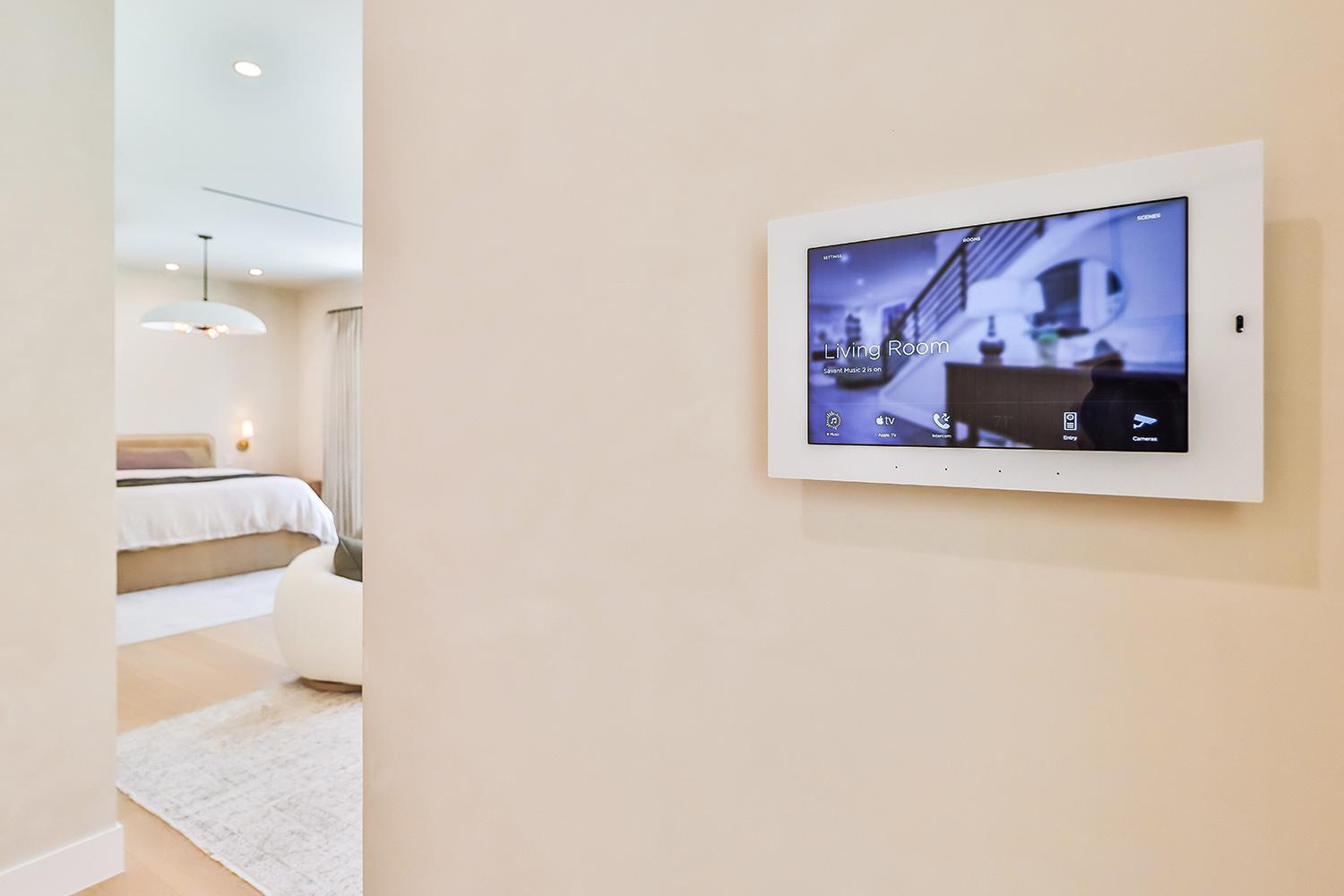
In addition to system functionality, the Get Wired Tec showroom also demonstrates how technology integrates seamlessly into a home’s design and finishes. Clients and design teams can explore real-world examples of lighting fixtures and speaker applications across various materials, allowing homeowners and builders to better understand trim options, speaker visibility, lighting effects, and how different installation methods impact both performance and aesthetics.
Beyond visual applications, clients can fully interact with multiple home automation platforms to determine which system best fits their lifestyle and preferences. From lighting control and climate management to access control, security cameras, and audio-video distribution, the showroom provides a hands-on experience of how these systems function in a real home environment. This interactive approach gives clients confidence in their decisions while helping builders and designers align technology with both user experience and overall project goals.
Commissioning, Handover, and Long-Term Support
Commissioning is the technology equivalent of final inspections—essential before calling the project complete. This is where seamless integration becomes reality.
Commissioning steps:
-
Verify 100% device pairing across all smart home devices
-
Program 20-50 scenes based on client preference
-
Final network testing
-
Verify remote access via cloud portals for remote monitoring
-
Document system settings with as-built drawings
Client handover process:
-
2-4 hour training sessions covering daily operations
-
App setup on all family members’ devices
-
Video tutorials for busy or traveling homeowners
Long-term service value: Service plans provide peace of mind through 24/7 monitoring, quarterly firmware pushes for extra security, annual checkups, and priority dispatching. Los Angeles, Malibu, and Westlake Village GCs report 70% fewer callbacks when homeowners contact the integrator directly for tech issues.
With this structure, the homeowner’s first call goes to Get Wired Tec—not you—protecting your time and reputation after move-in.
How Get Wired Tec Partners with General Contractors in Greater Los Angeles
Get Wired Tec serves Los Angeles, Santa Monica, Malibu, Westlake Village, Thousand Oaks, and communities throughout LA and Ventura Counties with full-service smart home integration.
Core capabilities for GCs:
-
Custom smart home technology design
-
Structured wiring and robust network infrastructure
-
Budget friendly to high end dedicated home theater systems
-
Lutron shades and smart lighting control (Homeworks & Ketra)
-
Security camera surveillance and gate automation
-
Outdoor entertainment systems for coastal estates
OurHTA certification and CEDIA affiliations signal process maturity that GCs can trust on complex residential builds.
Typical collaboration workflow:
-
Initial GC meeting to review plans
-
Joint client discovery session
-
Design and budget proposal within 72 hours
-
Bi-weekly coordination meetings during construction
-
1-year warranty and ongoing support post-completion
Ready to streamline your next project? Contact Get Wired Tec early in your next Los Angeles or Ventura County build. We’ll review plans, identify opportunities, and provide a preliminary integration budget—before the first wall goes up.
FAQ
When should I first involve a smart home integrator in my project?
The ideal time is during schematic design or early design development—before electrical plans are finalized. This allows low-voltage and network infrastructure integration without change orders. Get Wired Tec often reviews drawings alongside structural and MEP engineers on Los Angeles and Malibu projects, saving clients $10K-$50K in potential rework.
Can my existing electrician handle all the smart home work instead of an integrator?
While many electricians install basic smart devices, a smart home integrator provides system design, programming, network architecture, and cross-system coordination that standard electrical scopes don’t cover. Get Wired Tec works alongside your preferred electricians, keeping high-voltage and low-voltage roles clearly defined without scope overlap.
How do we handle changes when the homeowner upgrades their technology mid-project?
Use a clear change-management approach: documented revised proposals, signed approvals, and scheduled impact updates to rough-in, trim, and commissioning dates. Route all tech-related change requests through the integrator, who can quickly assess whether existing wiring and rack space support the upgrade.
What happens if something breaks after the homeowner moves in?
A professional integrator like Get Wired Tec offers ongoing service plans, remote monitoring, and on-site support for failures, resets, and firmware updates. The homeowner contacts the integrator directly instead of the general contractor, reducing warranty callbacks and protecting your schedule for new construction and renovation projects.
Is smart home integration worth it on smaller or mid-range projects?
Even modest homes in markets like Thousand Oaks benefit from structured cabling, proper wi fi coverage, and prewiring for future audio, cameras, or EV chargers. Basic infrastructure costs are minimal compared to retrofit expenses later. A scalable starter package ensures the living space can grow with the homeowner’s needs and budget, delivering more convenience and energy savings over time.